



Guest Wi-Fi has become an expected part of the customer experience across retail, hospitality, restaurants, healthcare, and commercial spaces. Customers expect fast, reliable, and seamless internet access wherever they go, and businesses increasingly view guest Wi-Fi as more than a convenience. Today, guest Wi-Fi supports customer engagement, marketing, operational visibility, and overall brand experience.
A captive portal is the branded login or splash page users see before accessing a guest Wi-Fi network. Instead of connecting directly to the internet, guests are guided through a customized experience that can include login authentication, promotions, loyalty programs, surveys, terms of service, or social media engagement opportunities. Beyond simplifying access, captive portals help businesses create stronger customer interactions, collect first-party data, personalize engagement, and gain valuable operational insights.
As businesses continue investing in customer experience and data-driven decision making, captive portals have become an increasingly important part of modern guest Wi-Fi strategies.
The first interaction guests have with a Wi-Fi network often shapes how they perceive the overall experience. A branded captive portal immediately reinforces professionalism while making the connection process smoother and more intuitive.
Rather than displaying a generic login screen, businesses can customize the experience to reflect their brand identity and customer journey. This creates opportunities to showcase products, promote events, encourage app downloads, or support loyalty programs directly within the guest Wi-Fi onboarding flow.
Captive portals can support:
This transforms guest Wi-Fi from a simple connectivity service into a direct engagement and marketing touchpoint.
For businesses operating across multiple locations, captive portals also help create consistency throughout the customer experience. Whether someone visits a retail location, hotel, multifamily property, restaurant, healthcare facility, or outdoor public space, the guest Wi-Fi process can remain familiar, branded, and aligned with broader marketing initiatives.
Captive portals also help businesses extend digital engagement into physical environments. A customer walking into a retail store, checking into a hotel, entering a multifamily amenity space, or waiting in a healthcare facility can immediately interact with branded digital experiences before even speaking with staff members.
This creates additional opportunities to promote services, communicate updates, encourage loyalty participation, and support customer engagement goals directly through guest Wi-Fi.
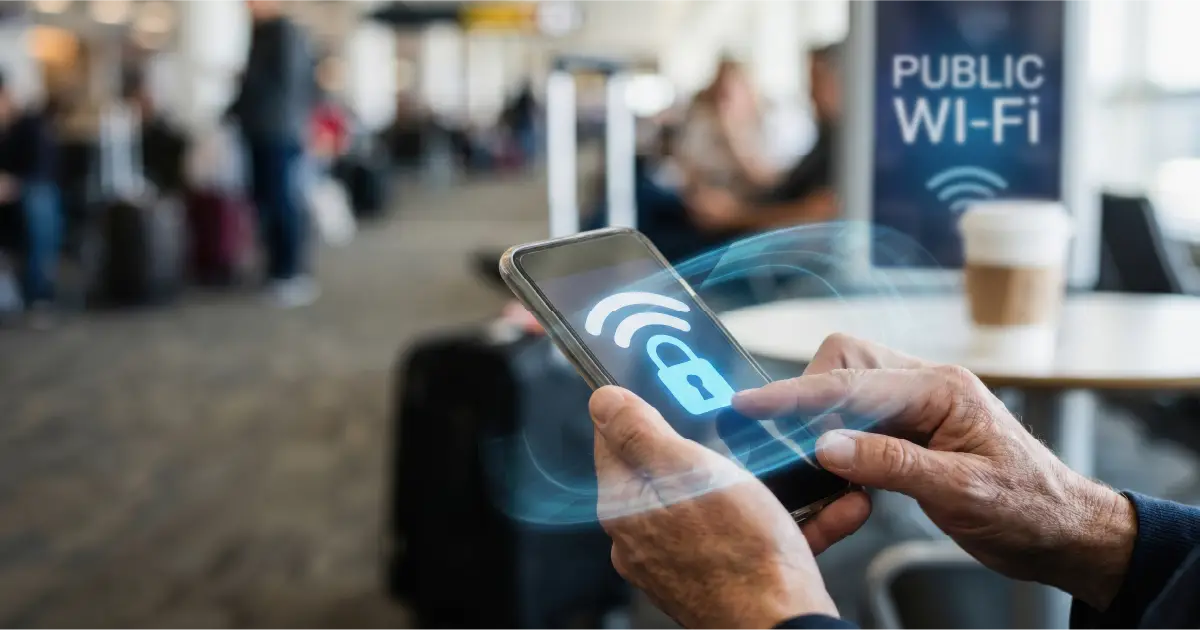
Public Wi-Fi users are increasingly aware of the risks associated with connecting to unfamiliar networks. In busy environments, duplicate or misleading network names can create confusion and reduce confidence during the login process. We covered how to properly manage guest Wi-Fi networks in a previous article.
A branded captive portal helps guests quickly recognize they are connecting to an official business network. This creates a smoother onboarding experience while reinforcing trust and loyalty from the moment a user connects.
Captive portals also help businesses maintain greater control over the guest Wi-Fi experience by centralizing messaging, branding, authentication methods, and user access policies within a single interface.
From a branding perspective, captive portals also create consistency across physical and digital customer touchpoints. Businesses can align Wi-Fi onboarding with existing marketing campaigns, seasonal promotions, loyalty initiatives, or broader brand messaging strategies.
For multi-location businesses, this consistency becomes especially valuable. Organizations can individually manage guest Wi-Fi experiences across hundreds of locations while still supporting localized promotions or property-specific messaging where needed.
One of the biggest advantages of captive portals is their ability to support first-party data collection through guest Wi-Fi access. As businesses adapt to evolving privacy standards and the decline of third-party tracking, first-party customer data has become significantly more valuable for marketing and customer engagement strategies.
Captive portals can help businesses collect consent-based customer information directly during the Wi-Fi login process. That includes email address, name, age, gender, or whatever information the business values. They can then associate that customer data with repeat visits, dwell time, visit frequency, zones of interest and engagement trends.
Guest Wi-Fi platforms have reported converting 60% to 80% of foot traffic into email subscribers through captive portal sign-ins, helping businesses grow valuable first-party audiences directly from on-site visits.
This information creates opportunities to build stronger long-term customer engagement strategies rather than relying exclusively on third-party advertising platforms.
This data can translate into:
Email marketing itself continues to deliver some of the strongest returns across digital channels. Multiple industry studies report an average ROI of approximately $36 for every $1 spent.
For retailers and restaurants, this can support campaigns tied to promotions, seasonal launches, and repeat visit incentives. For hospitality businesses, guest Wi-Fi data can support loyalty engagement and personalized guest communication.
When integrated properly, guest Wi-Fi becomes part of a broader customer engagement ecosystem rather than simply an internet connection.
Modern captive portals do more than authenticate users. They are the critical first step that enables proximity marketing by turning anonymous visitors into known, consenting guests.
Before a captive portal, Wi‑Fi data is largely anonymous and limited to network-level analytics. Once a guest engages with the captive portal, shares basic information, and accepts terms, businesses can begin associating network activity with an identified visitor. This opt‑in moment is what unlocks proximity marketing.
When paired with proximity marketing platforms, captive portals allow businesses to understand and engage visitors based on real-world behavior, including:
Retailers can use this information to personalize communications and promotions. Restaurants can identify loyal guests and optimize offers around peak dining windows. Venues and event-driven environments can gain insights into visitors’ interests and engagement hotspots.
Businesses can activate these experiences using proximity marketing solution, such as Datavalet’s DV Engage proximity marketing platform, which builds directly on the captive portal interaction to enable visitor engagement, dwell-time analysis, and repeat-visit insights.
By transforming guest Wi‑Fi access into an opt‑in engagement channel, captive portals help organizations move beyond connectivity and into measurable, data-driven visitor experiences. Staffing models, marketing campaigns, leasing strategies, event planning, and operational decisions can all be informed by proximity marketing data that begins at the captive portal.
As businesses continue investing in connected customer experiences, this shift is accelerating. Grand View Research projects the global captive portal market to reach approximately $6.2 billion by 2033, reflecting growing investment in platforms that connect Wi‑Fi access with customer engagement and value-generating experiences.
Personalization has become an important part of modern customer engagement strategies. Captive portals create opportunities to deliver more tailored Wi-Fi experiences.
Instead of showing the same generic login screen to every visitor, businesses can personalize captive portals using branding, locations, promotions, languages, campaigns, or customer segments. This helps create a more connected and relevant customer journey from the moment users access guest Wi-Fi.
Businesses can personalize captive portals with:
This allows guest Wi-Fi to align more closely with broader digital marketing and customer experience initiatives.
For example, a retailer may promote limited-time offers tied to local inventory, while a hotel may highlight amenities, dining options, or loyalty enrollment opportunities.
Captive portals also create opportunities to personalize offers and messaging for returning visitors. By integrating guest Wi-Fi data with marketing and CRM platforms, businesses can deliver more targeted engagement based on customer behavior and visit history.
For example, repeat visitors can receive:
This helps businesses create more meaningful customer interactions while improving retention and repeat engagement.
Personalized marketing strategies continue to deliver stronger performance across digital channels, with research showing that personalized campaigns can significantly increase engagement and transaction rates. (superoffice.com)
Businesses looking to combine guest Wi-Fi analytics, engagement, and personalized marketing automation can also explore Datavalet DV Engage.
Modern captive portals can also support revenue generation strategies. Some organizations such as hospitals use paid guest Wi-Fi to create premium access tiers.
Businesses may choose to promote internal offers and services directly through the captive portal experience, while larger venues and commercial environments may integrate third-party sponsorships or advertising opportunities.
This allows guest Wi-Fi to support both customer experience and broader business growth initiatives simultaneously.
Captive portals also help businesses manage public network access more effectively. Features such as terms of service acknowledgment, consent management, authentication workflows, and access policies help organizations create a more structured and expertly managed guest Wi-Fi experience.
Separating guest traffic from internal business networks can also help improve network organization and reduce operational complexity. Captive portals allow businesses to define how users access the network while maintaining greater visibility and control over the guest Wi-Fi environment.
For organizations operating across multiple locations, this creates a more scalable and manageable approach to public Wi-Fi access.
Datavalet can also help businesses standardize onboarding policies, authentication methods, and guest access experiences across properties while supporting centralized visibility and management capabilities. We can also reinforce your network security and enhance your infrastructure integrity and access control.
Captive portals have become an essential part of modern guest Wi-Fi strategies. As customer expectations for connectivity continue growing, businesses are looking for ways to deliver more than just internet access. They want guest Wi-Fi experiences that support engagement, strengthen branding, generate insights, and contribute to broader business goals.
By combining branded onboarding, first-party data collection, customer analytics, personalization, marketing opportunities, and operational visibility into a single platform, captive portals help businesses get more value from every visitor connection.
From retail stores and restaurants to hotels, healthcare facilities, and commercial properties, captive portals are helping organizations transform guest Wi-Fi into a more measurable, scalable, and customer-focused experience. To get started on building captive portals, reach out to Datavalet’s team of experts.

Every organization is unique. Our experts will work with you to design the right mix of products and services for your needs, from multi-site deployments to enterprise-scale rollouts.


.svg)